
Understanding VSI Crusher Parts in Mining and Aggregate Production
In the demanding environments of mining and quarrying, Vertical Shaft Impactors (VSI) are the preferred choice for tertiary and quaternary crushing. VSI Crusher Parts are the specialized internal components engineered to handle the high-velocity impact required to produce cubical, high-quality aggregates and manufactured sand. Unlike traditional compression crushers, a VSI utilizes a high-speed rotor to fling material against a stationary crushing chamber, making the precision and metallurgy of its internals critical to the comminution process.
The Role of Internal Components
The primary function of VSI Crusher Spare Parts is to facilitate energy transfer while protecting the machine’s structural integrity. Within the crushing chamber, material is accelerated by the rotor and directed toward either a “rock shelf” in autogenous (rock-on-rock) configurations or metal anvils in rock-on-metal setups. These parts ensure optimal flow patterns, directly influencing the throughput, particle shape, and the overall reduction ratio of the circuit.
Wear Parts vs. Mechanical Components
To maintain peak operational efficiency, it is vital for site managers to distinguish between sacrificial components and structural assemblies:
- Crusher Wear Parts: These are consumable items designed to be replaced periodically. Examples include rotor tips, back-up liners, distributor plates, and feed tubes. Typically manufactured from high-chrome alloys or featuring tungsten carbide inserts, these parts bear the brunt of extreme abrasion and impact.
- Mechanical Components: These refer to the “permanent” drivetrain and structural heart of the VSI, including the main shaft, bearing cartridge, pulleys, and housing. While these parts require regular maintenance and lubrication, they are not intended to be “worn away” during the standard crushing process.
Investing in high-grade wear liners and precise rotor balancing ensures consistent cubicity in the final product while minimizing the downtime associated with premature component failure.
Technical Principles of VSI Crusher Operation
Vertical Shaft Impactors (VSI) utilize centrifugal force rather than mechanical compression to achieve comminution. This process is essential for producing high-quality, cubical aggregates and manufactured sand that meet stringent engineering standards for concrete and asphalt production.
1. Material Entry and Centrifugal Acceleration
The process begins when feed material enters vertically through the top of the machine, passing through a feed tube into the center of the VSI Rotor. As the rotor spins at high peripheral speeds—typically ranging from 45 to 90 m/s—centrifugal force accelerates the particles toward the rotor ports. These particles are then ejected into the crushing chamber at extreme velocities, where the actual reduction occurs.
2. Comminution Dynamics: Rock-on-Rock vs. Rock-on-Anvil
The crushing efficiency and the service life of internal VSI Crusher Parts depend heavily on the configuration of the impact zone:
-
Rock-on-Rock (Autogenous): In this configuration, ejected material strikes a “rock shelf”—a self-aligning bed of material built up against the outer wall. Comminution occurs via inter-particle attrition and impact. This method significantly reduces the wear rate of internal liners and is the preferred choice for highly abrasive ores where maintaining cubicity is the primary objective.
-
Rock-on-Anvil: Here, the material strikes stationary metal anvils. This setup provides a much higher reduction ratio and is more effective for softer or non-abrasive feeds where a finer graduation is required. However, it necessitates more frequent monitoring of wear-resistant alloy components.
3. Velocity and Graduation Control
Rotor speed is the critical variable for controlling the final product’s grading and shape. Increasing the rotor tip speed elevates the kinetic energy at impact, which shifts the grading curve toward the finer end and maximizes cubicity. Conversely, lowering the RPM produces a coarser output. By adjusting the rotor speed and the “cascade” feed (allowing a portion of the material to bypass the rotor), quarry engineers can precisely manipulate the breakage envelope to meet specific project specifications.
Main Types of VSI Crusher Parts
Optimizing a Vertical Shaft Impactor (VSI) requires a clear understanding of its internal anatomy. To maintain high-quality cubical production, components are categorized into two functional groups: wear-intensive sacrificial items and long-term structural assemblies.
1. Crusher Wear Parts (Sacrificial)
These components are engineered to withstand the extreme kinetic energy and abrasion inherent in the crushing chamber. Crusher Wear Parts include items like distributor plates, feed tubes, and specialized VSI Rotor Parts such as rotor tips and backup liners. Typically manufactured from high-chrome alloys or featuring tungsten carbide inserts, their primary role is to bear the brunt of material impact. Because they are in constant contact with abrasive feed, their lifespan is relatively short—ranging from a few dozen to several hundred hours—necessitating a proactive replacement schedule to protect the rotor’s structural integrity.
2. Mechanical Parts (Structural)
In contrast, mechanical components comprise the drivetrain and support systems of the machine. This category includes the main shaft, bearing cartridge, and drive pulleys. These VSI Crusher Spare Parts are designed for longevity and precision, focusing on energy transmission and vibration dampening rather than direct material contact. While wear parts are replaced frequently, mechanical parts are intended to last for years, provided that rigorous lubrication protocols and thermal monitoring are followed to prevent catastrophic failure of the bearing assembly and ensure consistent peripheral speeds.
VSI Crusher Wear Parts (High Wear Components)
In a Vertical Shaft Impactor (VSI), the components exposed directly to high-velocity material flow are collectively known as VSI Crusher Wear Parts. These parts experience extreme abrasion, impact stress, and friction during operation. Because the crushing process in a VSI relies on high-speed particle acceleration and repeated impact events, wear parts inevitably degrade over time. Their condition directly influences machine efficiency, particle shape, throughput capacity, and overall operating cost. As a result, Crusher Wear Parts are considered the most critical consumable components in any VSI system. Proper selection and timely replacement of these parts are essential for maintaining stable production and consistent aggregate quality.
The most important VSI Crusher Parts in this category include VSI Rotor Tips, VSI Anvil Parts, VSI Wear Plates, and the VSI Feed Tube. Each component plays a specific role within the crushing chamber and experiences different wear patterns depending on material hardness, feed size, and crusher configuration.
VSI Rotor Tips are installed on the outer edge of the rotor and represent the primary contact point between the machine and incoming material. As the rotor spins at very high speeds, rotor tips accelerate and discharge material outward into the crushing chamber. Because they endure the highest combination of impact and abrasion, rotor tips are typically the fastest-wearing components in the system. Their geometry and condition directly influence the material’s exit velocity, which in turn affects particle shape and crushing efficiency.
VSI Anvil Parts are used primarily in rock-on-anvil configurations, where accelerated material is intentionally directed toward fixed impact surfaces mounted on the chamber walls. These anvils absorb intense impact energy and perform the secondary stage of crushing and shaping. Durable materials such as high-chrome alloys or abrasion-resistant liners are commonly used to extend service life under continuous impact conditions.
VSI Wear Plates protect the internal walls of the crusher from abrasive material flow. While they are not always the primary impact surface, they shield structural components from erosion and help maintain the correct internal chamber geometry. Maintaining proper wear plate thickness ensures that the crusher operates with stable material flow patterns and consistent shaping performance.
Another essential component is the VSI Feed Tube, which directs raw material into the center of the rotor. Its main function is to distribute material evenly and prevent uneven rotor loading. When the feed tube wears excessively or becomes misaligned, the rotor may experience imbalance, leading to vibration, uneven wear on rotor tips, and reduced production efficiency.
Together, these VSI Crusher Wear Parts form the functional interface between the crusher and the processed material. Their design, material composition, and maintenance schedule significantly influence final product shape, fines generation, and plant productivity. In high-performance aggregate operations, optimizing these wear components is one of the most effective ways to improve both crushing quality and cost efficiency.
The Engineering of VSI Rotor Tips: Precision and Metallurgy
In the hierarchy of VSI Crusher Spare Parts, the rotor tip is the most critical component. Positioned at the ejection point of the rotor ports, these parts are responsible for the final acceleration of material before it enters the crushing chamber. The performance of VSI Rotor Tips directly dictates the throughput, exit velocity, and the resulting particle shape of the final aggregate.
Mechanics of Acceleration and Throw
As the rotor spins at high peripheral speeds, feed material is forced outward by centrifugal force. A “rock pocket” or dead-bed of material typically forms behind the tip, protecting the rotor body. The rotor tip serves as the final contact point, acting as a high-precision guide that “throws” the material against the anvils or rock shelf. Any deviation in tip geometry due to uneven wear results in turbulent flow, reduced kinetic energy, and increased vibration, which can lead to premature failure of the bearing assembly.
Comparative Analysis of Metallurgy
Selecting the correct alloy is a balance between hardness (to resist abrasion) and toughness (to resist impact).
| Material Type | Advantages | Disadvantages | Best Application |
| High Chrome | Excellent abrasion resistance; $HRC$ 60-65 hardness. | Brittle; prone to fracturing if tramp metal enters. | Standard abrasive rock (granite, basalt). |
| Manganese Steel | High toughness; work-hardens under impact. | Low initial hardness; wears too fast in high-speed VSI apps. | Non-abrasive, high-impact limestone. |
| MMC Crusher Parts | High-tech ceramic grains embedded in metal; “best of both worlds.” | Higher initial cost. | Extreme abrasion where standard chrome fails. |
| Ceramic Crusher Parts | Exceptional service life; maintains sharp edges longer. | Very low impact resistance; strictly for secondary/tertiary. | Fine sand production and recycling. |
High Chrome Crusher Liners and tips remain the industry standard for most aggregate producers, though many operations are transitioning to MMC Crusher Parts (Metal Matrix Composites) to extend maintenance cycles in high-silica environments.
Maintenance and Replacement Intervals
The service life of a rotor tip is measured in operational hours and is heavily dependent on the “abrasiveness index” of the feed. In highly abrasive quartz applications, tips may require replacement every 50 to 100 hours. In softer limestone, they may last upwards of 500 hours. Operators should monitor the “wear line” across the tip; once the tungsten carbide insert or the primary alloy is breached, the rotor body becomes vulnerable to “wash,” which can necessitate a total rotor rebuild.
VSI Anvils and Wear Plates: Impact and Protection
In a Rock-on-Anvil configuration, the crushing dynamics shift from inter-particle attrition to high-energy impact against stationary targets. VSI Anvil Parts are the primary striking surfaces arranged in a ring around the crushing chamber. When the rotor ejects material at velocities exceeding $60 text{ m/s}$, these anvils provide a rigid, high-hardness surface that shatters the incoming rock upon contact. This setup is particularly effective for non-abrasive materials where a high reduction ratio and a fine gradation of the final product are required.
Energy Absorption and Chamber Protection
The integrity of the VSI housing is maintained through a strategic layout of VSI Wear Plates. While the anvils handle the direct, primary impacts, the surrounding chamber is lined with Abrasion Resistant Liners. These plates are designed to absorb the secondary kinetic energy of rebounding material and protect the structural steel from “wash” and scouring. Because the Rock-on-Anvil method generates significantly more heat and mechanical stress than autogenous crushing, these liners must be precisely fitted to prevent fine particles from bypassing the protective layer and eroding the main frame.
Material Composition and Metallurgy
To withstand the relentless bombardment of aggregate, these components are typically cast from specialized alloys:
-
High-Chrome Iron: Often utilized for its exceptional hardness ($HRC text{ 58–62}$), making it ideal for resisting the sliding abrasion found in the crushing chamber.
-
Composite Alloys: Many modern VSI Anvil Parts incorporate ceramic or tungsten inserts to extend service life in applications with a high silica content.
Regular inspection of the anvil’s leading edge is critical; once the profile becomes excessively rounded, the impact angle changes, leading to decreased crushing efficiency and increased recirculating loads.
The Mechanical Core: Precision Engineering in VSI Systems
While wear liners handle material impact, the mechanical integrity of a Vertical Shaft Impactor relies on the precision of its drivetrain and rotational components. The VSI Rotor Assembly is the heart of this system, functioning as a high-speed centrifuge that must maintain absolute stability while spinning at rates often exceeding $1,500 RPM
Shaft and Bearing Dynamics
The VSI Shaft Parts are engineered to transmit massive torque from the drive motor to the rotor. This vertical spindle is supported by high-performance VSI Bearings, typically housed within a specialized bearing cartridge. These bearings are designed to handle both radial loads from material acceleration and axial loads from the weight of the spinning assembly. Due to the high speeds involved, these components require sophisticated lubrication systems—either oil-mist or heavy-duty grease—to dissipate thermal energy and prevent metal-on-metal contact.
The Criticality of Dynamic Balance
In the quarrying industry, vibration is the primary enemy of longevity. Because the rotor acts as a massive flywheel, any uneven wear on internal VSI Crusher Spare Parts can shift the center of mass. Even a few grams of imbalance can generate kilonewtons of centrifugal force, leading to:
-
Fatigue Failure: Rapid crystallization and cracking of the main shaft.
-
Bearing Seizure: Excessive heat buildup that destroys rolling elements.
-
Structural Damage: Cracking of the main frame or motor mounts.
Operational Failure Risks
The greatest risk to these mechanical parts is “unbalanced operation” caused by neglecting to replace wear tips in matched sets. If an operator replaces only one worn tip rather than the full set, the resulting vibration can lead to catastrophic bearing failure within hours. Maintaining the mechanical core through vibration monitoring and regular thermal checks is the only way to ensure the VSI remains a reliable asset in the production circuit.
Industrial Applications and Material Processing with VSI Components
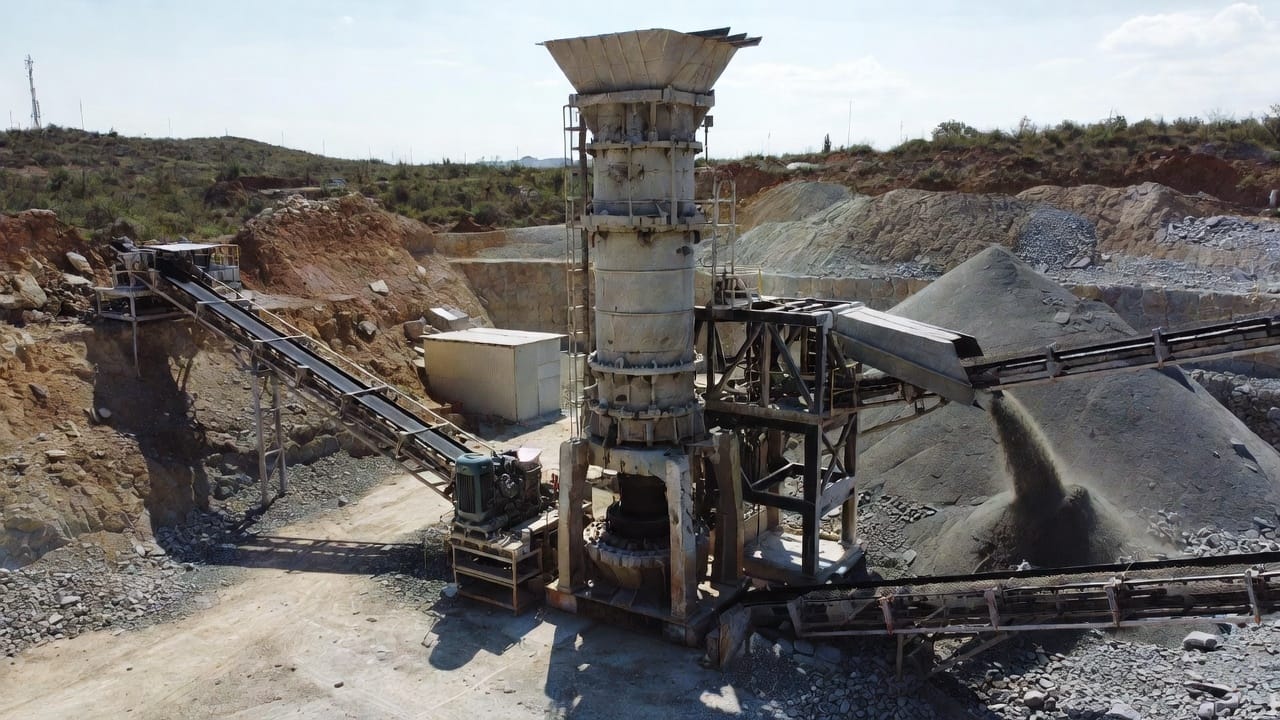
Vertical Shaft Impactors are the industry standard for achieving superior particle shape across diverse sectors. The selection of Quarry Crusher Parts is largely dictated by the specific geological characteristics of the feed material and the requirements of the end product.
Aggregate Production and Infrastructure
In the aggregate industry, VSI technology is indispensable for producing “cubical” stone, which is a requirement for high-strength asphalt and concrete. Whether processing Granite Crusher Parts for high-abrasion resistance or Basalt Crusher Parts to handle tough, volcanic rock, the goal remains the same: reducing elongated particles and “flakiness.” This ensures better compaction and less binder usage in downstream construction applications. For softer sedimentary rocks like limestone, these Aggregate Crusher Parts focus on high-volume throughput to meet the massive demands of regional infrastructure projects.
Mining and Circular Economy
Beyond traditional quarrying, VSI systems play a pivotal role in:
-
Mining Beneficiation: VSIs are used to create a finer feed for grinding mills, significantly reducing energy consumption in the comminution circuit. The high-speed impact helps liberate valuable minerals from waste rock along natural cleavage planes.
-
Waste Management: The rise of the circular economy has increased the demand for specialized Concrete Recycling Parts. VSIs are uniquely suited for recycling construction and demolition waste because the impact process effectively strips mortar from old aggregate and separates rebar, producing a high-quality recycled product that rivals virgin stone.
By matching the metallurgy of the liners to the specific application—whether it be abrasive granite or recycled rubble—operators can optimize their cost-per-ton and ensure the longevity of their production line.
Professional Selection Guide: Optimizing VSI Crusher Performance
Selecting the appropriate components for a Vertical Shaft Impactor (VSI) is a balance between metallurgical properties and operational strategy. The goal is to minimize downtime while maximizing the cubicity and quality of the final aggregate.
1. Analyzing Material Characteristics
The primary drivers of component wear are the Bond Impact Spallability and the Abrasion Index (Ai) of the feed material.
-
Hardness vs. Abrasiveness: For high-silica materials like quartz or granite, Long Life Crusher Liners featuring tungsten carbide or Metal Matrix Composites (MMC) are essential to resist sliding abrasion.
-
Impact Strength: In contrast, softer but tougher materials require liners with higher fracture toughness to prevent cracking under high-velocity impact. Selecting the wrong alloy can lead to either rapid thinning or catastrophic brittle failure.
2. Configuration Strategy: Rock-on-Rock vs. Rock-on-Anvil
The choice of configuration dictates your ongoing wear part requirements:
-
Rock-on-Rock (Autogenous): Best for highly abrasive feeds. This setup uses a “rock shelf” to protect the chamber, significantly reducing the need for High Performance Crusher Liners in the outer ring.
-
Roc-sur-enclume : Idéal pour les matériaux non abrasifs ou lorsqu’un rapport de réduction élevé est nécessaire. Cette configuration nécessite un jeu complet d’enclumes, ce qui augmente la fréquence de remplacement mais produit un produit plus fin.
3. Pièces VSI OEM vs. Pièces VSI de seconde monte
Le débat entre les pièces VSI OEM et les pièces VSI de seconde monte repose sur la précision et le coût total de possession (TCO) :
-
OEM (Original Equipment Manufacturer) : Garantit des tolérances exactes et un équilibrage du poids, ce qui est essentiel pour protéger l’arbre principal et les roulements des vibrations.
-
Seconde monte : Offre une alternative économique. Bien que souvent moins chère à l’achat, il est essentiel de vérifier la composition chimique de l’alliage et l’équilibrage dynamique de la coulée pour s’assurer qu’ils fonctionnent aussi bien que les composants d’origine.
4. L’analyse du coût par tonne
La sélection finale doit toujours être basée sur le coût par tonne, et non sur le prix d’achat initial. Une garniture haut de gamme qui coûte 20 % de plus mais dure 50 % plus longtemps réduit considérablement les coûts de main-d’œuvre et les revenus perdus associés aux temps d’arrêt de maintenance. En suivant la tonne traitée jusqu’à ce que la “ligne d’usure” soit atteinte, les responsables de carrière peuvent déterminer empiriquement quelles pièces offrent le meilleur retour sur investissement pour leurs conditions géologiques spécifiques.
Maintenance des pièces d’usure VSI : Un guide de terrain pour les ingénieurs de carrière
La maintenance proactive est le seul moyen de maximiser la durée de vie des garnitures de concasseur haute performance et de protéger le noyau mécanique de la machine. Pour un VSI, le cycle de maintenance tourne autour de deux facteurs critiques : la symétrie de l’usure et la stabilité thermique.
Inspection quotidienne et surveillance de l’usure
L’objectif principal doit être les pointes de rotor VSI. Les ingénieurs doivent inspecter quotidiennement le bord avant des pointes pour détecter des motifs de “lavage” ou des éclats.
-
Intégrité des pointes : Vérifiez les inserts en carbure de tungstène. Si le carbure est percé et que l’acier de support commence à s’éroder, le corps du rotor risque un “lavage” catastrophique.
-
Remplacement symétrique : Pour maintenir l’équilibrage dynamique, remplacez toujours les pointes de rotor par jeux complets et équilibrés en poids. Le remplacement d’une seule pointe crée un déséquilibre qui détruira les roulements VSI en quelques heures.
-
Rotation des garnitures : Inspectez les plaques d’usure supérieure et inférieure. La rotation de ces composants de 180° à mi-parcours de leur cycle de vie peut prolonger leur durée de service utile jusqu’à 30 %.
Lubrification et gestion thermique
Le carter de roulement est la pièce de rechange VSI la plus chère.
-
Contrôle de la température : Surveillez les températures du carter de roulement toutes les heures. Une augmentation soudaine (généralement supérieure à 75 °C à 80 °C) indique une défaillance de la lubrification ou une contamination.
-
Vérification de la contamination : Assurez-vous que tous les joints sont intacts. Dans l’environnement très poussiéreux d’une carrière, même une infiltration microscopique de silice entraînera une piqûration et une défaillance prématurée des roulements.
Le respect constant de ces protocoles garantit que les garnitures de concasseur longue durée atteignent réellement leur tonnage nominal, réduisant le coût total par tonne et évitant les temps d’arrêt imprévus dans le circuit de production.
Questions fréquemment posées : Pièces et maintenance de concasseur VSI
1. Que sont les garnitures de concasseur à haute teneur en chrome et pourquoi sont-elles utilisées ?
Les garnitures de concasseur à haute teneur en chrome sont des composants d’usure spécialisés à haute teneur en chrome, résultant généralement en une dureté de HRC 58-62. Elles sont utilisées car elles offrent une résistance supérieure à l’abrasion par glissement par rapport à l’acier standard. Cela les rend idéales pour le traitement de roches dures comme le granit ou le basalte, réduisant considérablement le “coût par tonne” dans les environnements à forte production.
2. Quand dois-je remplacer mes pointes de rotor VSI ?
Vous devriez remplacer les pointes de rotor VSI avant que l’insert principal en carbure de tungstène ne soit complètement usé. Une fois le carbure percé, le “lavage” par le matériau abrasif érodera rapidement l’acier de support et éventuellement le corps du rotor lui-même. Il est conseillé de les inspecter quotidiennement et de les remplacer lorsque l’usure atteint la limite de sécurité désignée par le fabricant.
3. Les pièces VSI de seconde monte sont-elles sûres pour les rotors à grande vitesse ?
Oui, les pièces VSI de seconde monte de haute qualité sont sûres, à condition qu’elles respectent des normes métallurgiques et d’équilibrage de poids strictes. Le facteur le plus critique pour la sécurité des VSI est l’équilibrage dynamique ; par conséquent, assurez-vous que votre fournisseur fournit des jeux équilibrés en poids pour éviter les vibrations excessives qui pourraient endommager vos roulements VSI.
4. Quel est l’avantage des pièces de concasseur en céramique (MMC) ?
Les pièces de concasseur en céramique, souvent appelées composites à matrice métallique (MMC), intègrent des céramiques industrielles dans une base métallique. Ces garnitures de concasseur longue durée offrent la résistance aux chocs du métal avec la dureté extrême des céramiques, durant souvent 2 à 3 fois plus longtemps que les pièces chromées standard lors du traitement de matériaux très abrasifs comme le quartz.
5. Pourquoi les pièces de rotor VSI doivent-elles être remplacées par jeux assortis ?
Pour maintenir la stabilité de l’ensemble rotor VSI, toutes les pièces sacrificielles doivent être équilibrées en poids. Le remplacement d’une seule pointe usée crée un déséquilibre de poids. À des vitesses de 1 500 tr/min et plus, même une légère différence de poids génère des forces centrifuges massives qui peuvent entraîner une défaillance catastrophique des pièces d’arbre VSI.
6. Comment les configurations Roc-sur-enclume affectent-elles les coûts d’usure ?
Dans une configuration Roc-sur-enclume, le matériau frappe les pièces d’enclume VSI métalliques plutôt qu’un lit de roche. Bien que cela augmente le rapport de réduction et améliore la finesse du sable, cela entraîne également une consommation plus élevée de pièces d’usure de concasseur. Les opérateurs choisissent cela lorsque la qualité et la granulométrie du produit sont plus précieuses que le coût de remplacements de pièces plus fréquents.
7. Qu’est-ce qui cause le “lavage” sur le corps du rotor VSI ?
Le “lavage” est l’érosion prématurée de l’acier structurel du rotor, généralement causée par des pointes de rotor VSI usées ou mal ajustées. Lorsque les pointes protectrices ou les garnitures de secours échouent, le matériau abrasif s’infiltre dans des zones non conçues pour l’usure, entraînant des réparations coûteuses ou un remplacement total du rotor.
8. Comment puis-je prolonger la durée de vie de mes pièces de concasseur d’agrégats ?
La meilleure façon de prolonger la durée de vie est une gestion constante de l’alimentation. S’assurer que le VSI est “alimenté en étouffement” aide à maintenir un “banc de roche” approprié, qui utilise la pierre elle-même pour protéger les plaques d’usure VSI. De plus, le nettoyage régulier des accumulations à l’intérieur du rotor empêche l’usure inégale et les vibrations.
9. Quels sont les signes de défaillance des roulements VSI ?
Les signes courants incluent une augmentation soudaine de la température de fonctionnement (au-dessus de 80 °C), un bruit aigu inhabituel ou une augmentation des niveaux de vibration. Comme il s’agit de pièces de rechange VSI critiques, tout signe de défaillance doit entraîner un arrêt immédiat pour éviter que le roulement ne se bloque et n’endommage l’arbre principal.
10. Puis-je utiliser des pièces de concasseur de granit pour le recyclage du béton ?
Oui, mais vous devez être conscient des métaux indésirables (ferraille). Bien que les pièces de concasseur de granit soient conçues pour une forte abrasion, elles sont souvent en chrome dur et fragile. Lorsqu’elles sont utilisées comme pièces de recyclage de béton, vous devez disposer d’un séparateur magnétique pour empêcher le métal de frapper et de briser les garnitures chromées.
Dernières informations
Guide des pièces d’usure pour concasseurs : Métallurgie et sélection des matériaux pour marteaux

Comment choisir les pièces de criblage et d’alimentation pour une efficacité maximale dans les opérations de carrière et d’exploitation minière

Fabrication avancée de pièces d’usure de concasseurs avec précision numérique