
Jaw Crusher Liners
Overview
Jaw liners, also known as jaw plates or crusher jaws, are essential wear parts in jaw crushers. They form the main crushing chamber and directly contact the material, applying compressive force to break it down. Proper selection and maintenance ensure optimal crusher performance, consistent output size, and reduced downtime.
Choosing Tycosen jaw liners means choosing high performance, excellent wear resistance, and dependable service. Our liners are made from premium materials with optimized designs, offering extended wear life and reducing operational costs. We prioritize timely delivery and efficient logistics to meet your spare parts needs.
Manganese Steel Materials
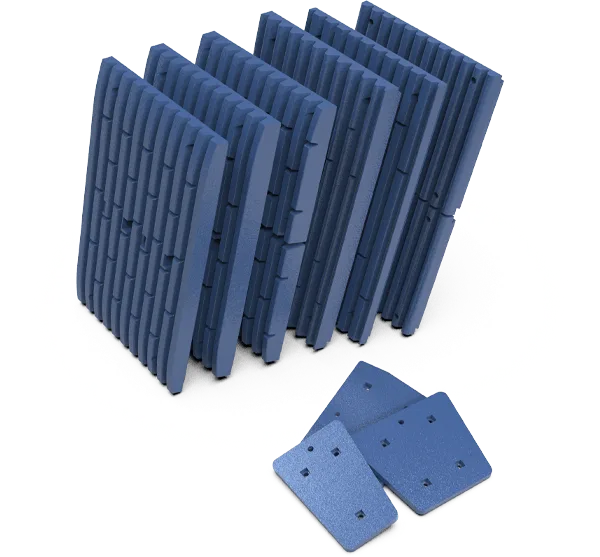
The wear performance of jaw liners depends heavily on the manganese steel used. This steel is known for strength, durability, and work hardening—the process where its surface becomes harder under impact and compression, enhancing wear resistance.
Tycosen offers various manganese steel grades to suit different applications:
| Material | Nominal Composition | Key Performance Attributes | Applicable Working Conditions |
|---|---|---|---|
| Standard Manganese Steel | ~13% Manganese | Good toughness and work hardening. A general-purpose alloy. | Suitable for various applications, particularly where impact is high but abrasion is moderate. |
| High Manganese Steel | ~18% Manganese, ~2% Chrome | Improved wear resistance and longer life compared to standard manganese, especially in more abrasive conditions. Higher work hardening. | Recommended for secondary and fine crushing of medium to difficult abrasive materials. |
| Very High Manganese Steel | ~22% Manganese, High Chrome | Offers the highest wear life among common manganese alloys. Excellent for highly abrasive materials. | Ideal for demanding, highly abrasive applications, often used in smaller crushers or specific applications where allowed. |
Choosing the right material depends on rock abrasiveness and application conditions. Tycosen experts can recommend the best alloy for your case to optimize liner performance and longevity.
Crushing Chamber Profiles
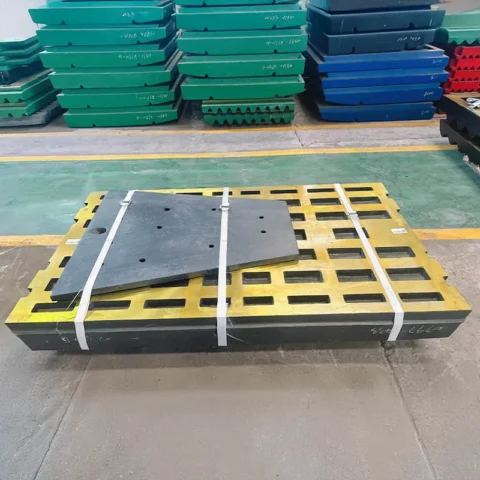
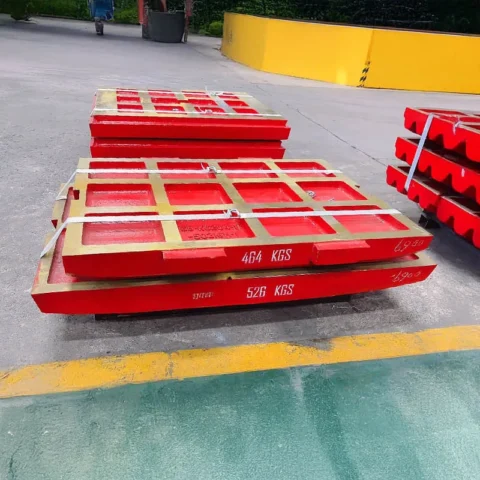
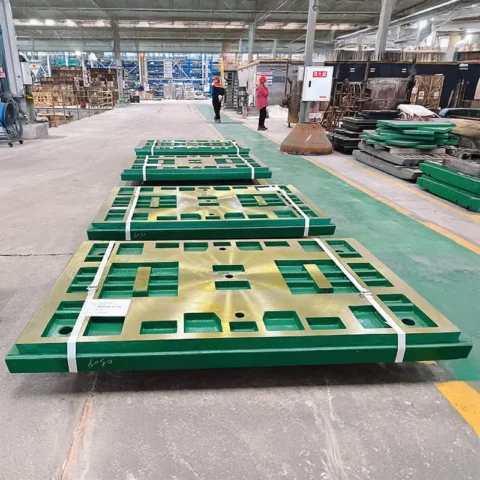
Jaw liner profile design is key to performance and output quality. Tycosen supports a wide range of profiles for various applications:
- Standard Profile: General-purpose shape suitable for rocks and gravel. Balanced wear life, power use, and stress handling.
- Super Tooth Profile: Heavier with a special tooth shape for longer life. Grooves allow fines to pass through easily. Good for gravel and medium-hard rocks.
- Quarry Tooth Profile: Flatter teeth with more wear material. Ideal for hard and abrasive rocks. May require more power, but offers strong durability.
We also offer other specialty profiles like Coarse Corrugated, Super Grip, and Sharp Teeth, suitable for specific feed characteristics. Profile choice depends on material friction, size, moisture, and product requirements.
Supported Crusher Models
Tycosen jaw liners are compatible with many leading crusher models and brands, ensuring accurate fit and performance.
If your model is not listed, please contact us. We offer extensive compatibility and custom solutions upon request.
| Brand | Representative Models |
|---|---|
| Metso | C80, C96, C106, C125, C140, C100, C110, C116, C120, C145, C160, C200, C3054, C3055 |
| Sandvik | CJ211, CJ412, CJ613, CJ815, CJ409, CJ411, CJ612, CJ615 |
| Terex | JW42, JW55, J-1170, J-1175, J-1480 |
| Allis‑Chalmers | RT6090, 6684, RT50105, RT5090, RT60105, RT80120, RT75120, RT75105, RT50120, RT60120, AC60, RT105120, AC3412, AC4860, 1080, AC84, AC7311, AC6048, AC2460, AC1260 |
| Austin Western | AW 2540, AW 4248, AW 3240, AW 2450, AW 1036, AW 1024 |
| Bergeaud | VB67, VB0907, VB92, VB83, VB1311, VB1109, VB108, VB105, VB1008D, VB1008, VB0806 |
| BIRDSBORO | 6084 |
| Blake | 1838 |
| Dragon | MP140, MR140, MR107 |
| Eagle | 3042 |
| Faco | 8050 |
| Fuller‑Traylor | 2836 |
| Goodwin Barsby | 4224(1065X610) |
| Hartl | 1380J |
| Hewitt Robins | 3054, 3048, 3640, 4860, 3042, 4248 |
| Jaques | 3042, 2030 |
| Kawasaki | 4860, 3042 |
| Keestrack | Unknown |
| Kleemann | MC125, MC120 PRO, MC120, MC110 EVO, MC110, MC100 EVO, MC100 |
| Kobelco | 3042 |
| Komatsu | BR350, BR500, BR380G, BR210JG |
| Komplet | K‑JC 704, 1910, 4825 |
| KPI‑JCI | JCI200, KPI‑2650 |
| Kue‑Ken | 36, 2042/108, 1742/107, 2436/95, 2036/90, 2030/75, 1636/89, 4224/1065X610 |
| Lippmann | 3054, 2248, 3042, 4860, 3048, 5062, 4248, 3650, 3062, 3640 |
| Lokomo | 2436, 2136, 3042, 2540 |
| MasterKrush | 1236 |
| McCloskey | J40V2, J44, C50, J50, J45, J40, J35, I54V3, I54, I44V3, I44, I34, C44, C38, 10570 |
| Minyu | MSH2436/600×900, MS4860/1200×1500, MS4060/1000×1500, MS4048/1000×1200, MS3254/800×1350, MS3248/800×1200, MS3042/750×1050, MS2642/650×1050, MS2436/600×900, MS2030/500×750, MS1624/400×600, 95S/2936, 3648/150, 2436 |
| Missouri Roger | 3548, 1020, 1524, 2136 |
| Nerytec | CRR103G |
| NMS | JC1150, JC1600 |
| Osborn | 4248 |
| Parker | 1100×650 |
| Pegson | 3042 |
| Pioneer | 4450, 3242, 3642, 2036, 3055, 2650, 3546, 4248, 2436, 3042, 2546, 1830 |
| Powerscreen | R300 |
| Ark | 1910 |
| Rexnord | 3042 |
| SBM | STE108‑75 |
| Svedala | 9025, 6240, 9026, P100100‑200 |
| Telsmith | H2550, 2650, 2536, 2250, 3048, 5060, 4552, 3244, 2036, 3042, 4448, 4248, 3648, 2540, 1832, 1524, 1424, 1324 |
| Tesab | TSA‑800, TSA‑700 |
| Trio | CT3042, CT1040, CT4763, CT4254, CT4673, CT3048, CT3648, CT3254, CT3054, CT2436, CT2036 |
| Universal | 6158, 74104, 1248, 2036 |
| VICKERS RUWOLT | 3042 |
| WILLIAM WONG | 4254 |
Technical Glossary
- Work Hardening: A property of manganese steel where its surface hardens under repeated impact or compression, enhancing wear resistance. Typically occurs within a few millimeters of the surface.
- Profile Optimization: Selecting or designing the most suitable tooth shape for specific applications, improving grip, throughput, and liner life.
- Wear Life: The total operating time or tonnage processed before a liner needs replacement. Affected by material properties, crusher settings, speed, and liner design.
Frequently Asked Questions
- How to choose the right jaw liner profile?
Consider material type, hardness, abrasiveness, feed size, moisture, fines content, and required output size. Each profile offers different advantages in grip, flow, and durability. Tycosen specialists can assist in selection based on your operating needs.
- What’s the typical wear life?
It varies depending on rock characteristics, feed condition, crusher setup, and liner design. For example, wear life increased by 70% in an abrasive application by switching to a heavy-duty fixed jaw plate. Monitor tooth height and replace when it drops below 90% of the original or the peak-to-valley distance is under 10mm.
- Can I customize materials or designs?
Yes. Tycosen offers customization of alloy composition and liner profile to match your specific needs. Contact our team for detailed support.